
The Rig
Building, converting and commissioning a vitrigraph kiln.
$17

Vitrigraph Institute
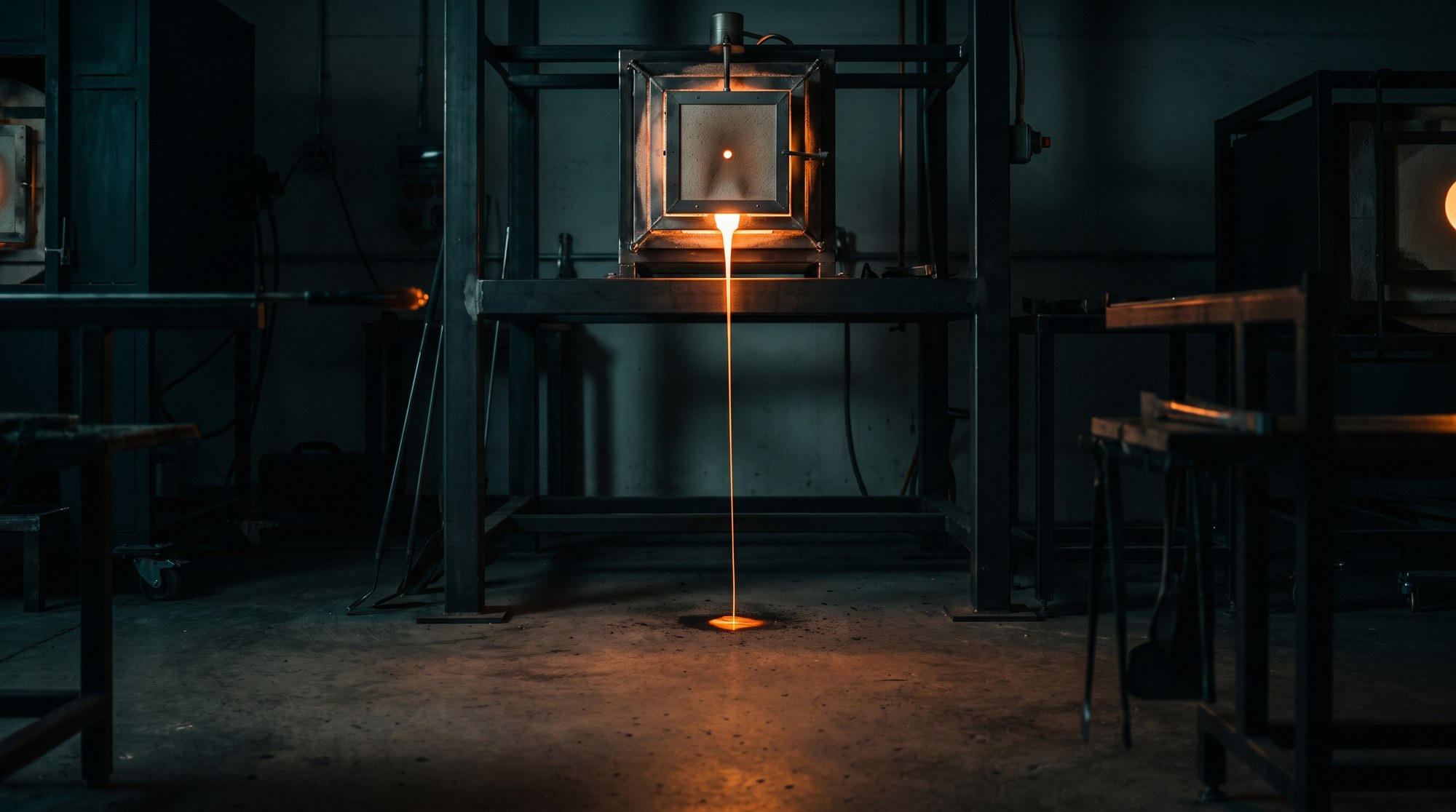
The complete step-by-step video course for kiln-glass artists ready to make their own components
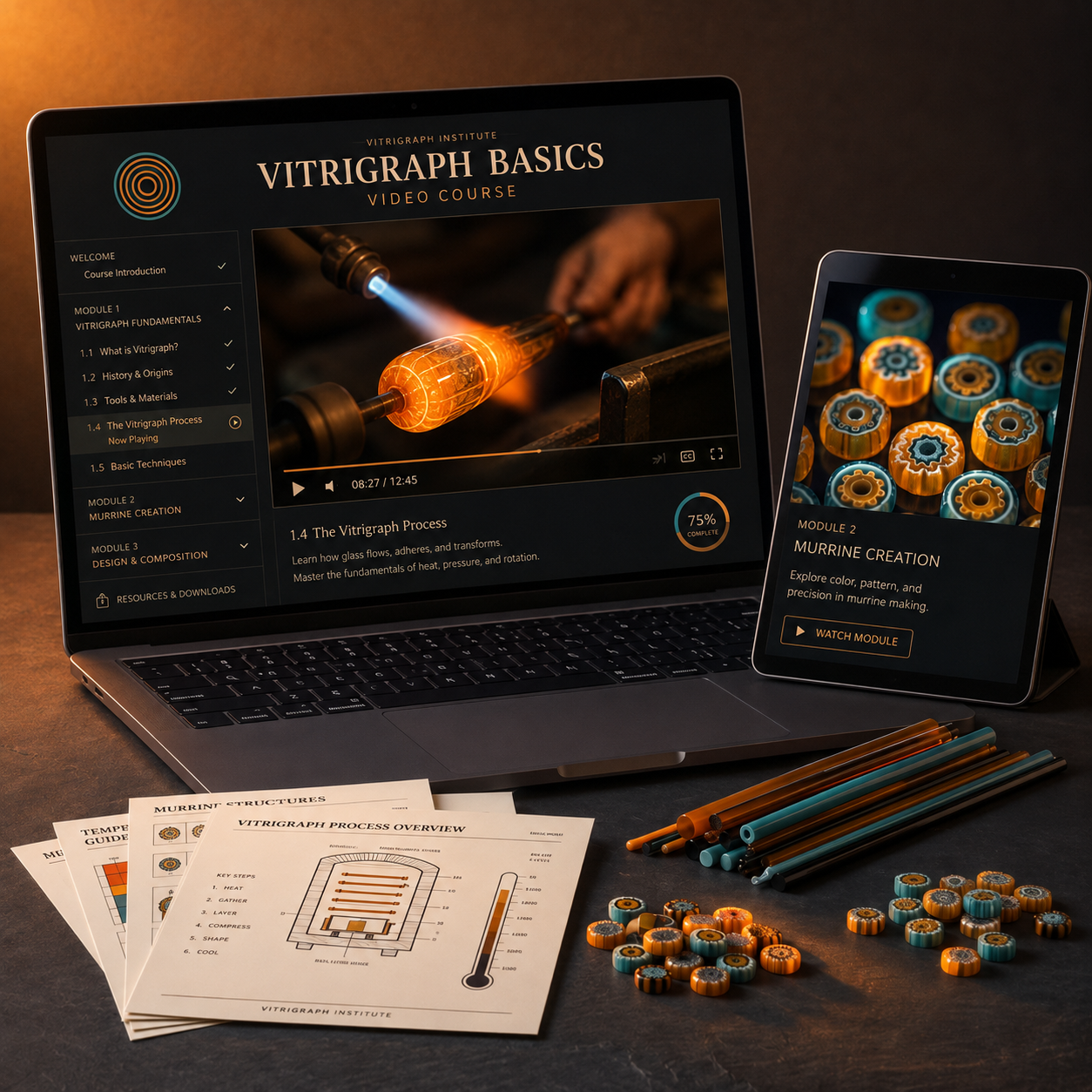
Everything you need to set up a vitrigraph kiln, understand how glass flows, and pull clean stringer, coil, bulbs, twisted designs and murrine. Includes flower, ladybug, leaf, heart, three abstract and concentric-circle murrine patterns - components nobody sells online.
$37 one-time · Lifetime access · Instant access
30-day money-back guarantee · Secure checkout · Instant access
The Problem
You can run a full fuse. You know your COE. You have your schedules dialled in and a kiln that cost you real money.
And yet every piece you make is assembled from components that anyone can order online. The same stringer. The same frit. The same murrine, from the same three suppliers, at prices that make you wince every time you open the jar.
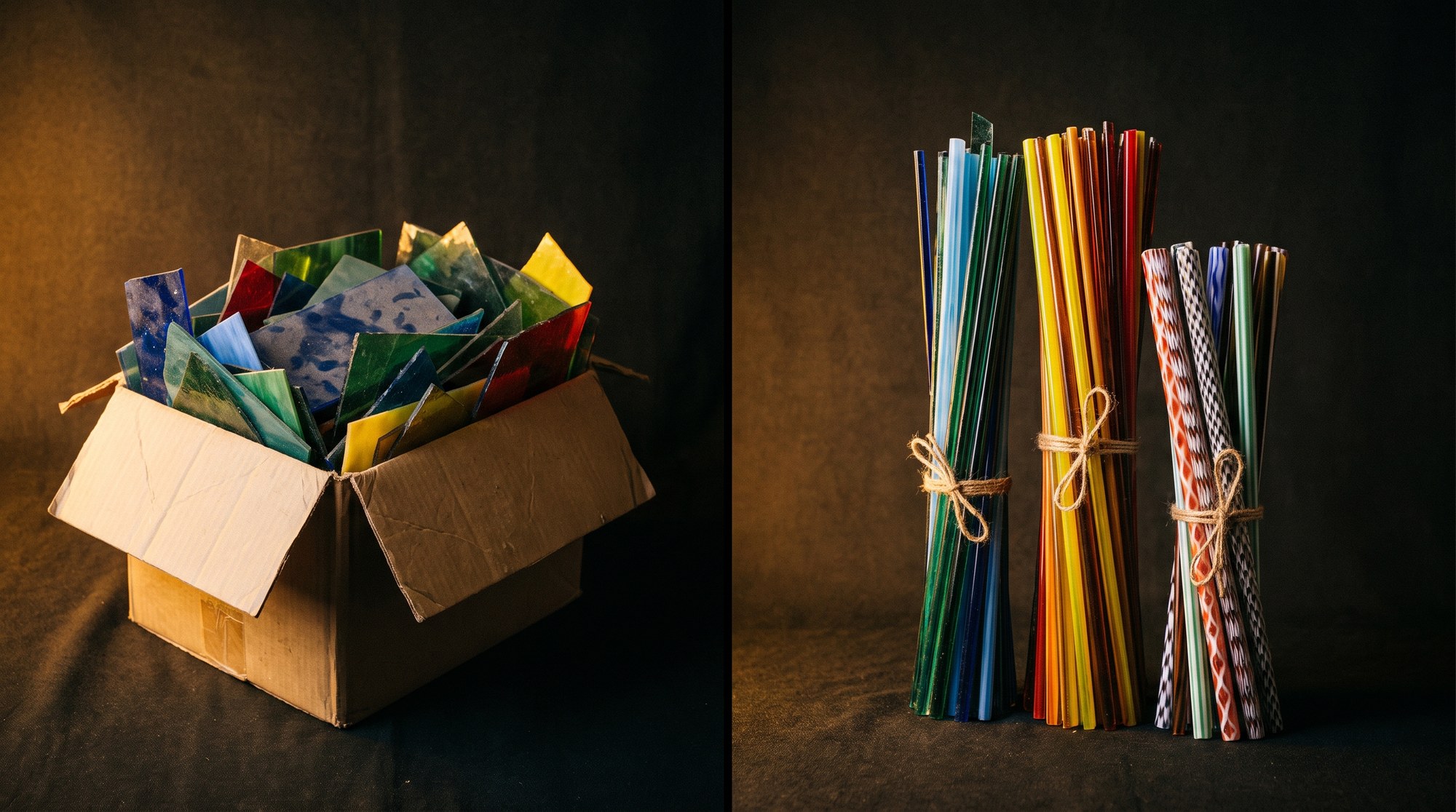
Meanwhile there is a box in the corner of your studio. Offcuts. Awkward triangles. The colours you bought and never loved. You cannot use it and you cannot bring yourself to throw it away.
That box is the raw material for the one technique that produces components nobody else can buy. It is called vitrigraph, and it turns your kiln into a small furnace that draws glass into a line you shape with your own hands.
How It Works
One page, email only, no account to create. $37 one-time.
Six modules and the printable firing reference. Start the same minute.
Build the rig, run the schedule, and make your first pulls. Expect the first session to be practice.
30-day money-back guarantee · Secure checkout · Instant access
Glass Writing
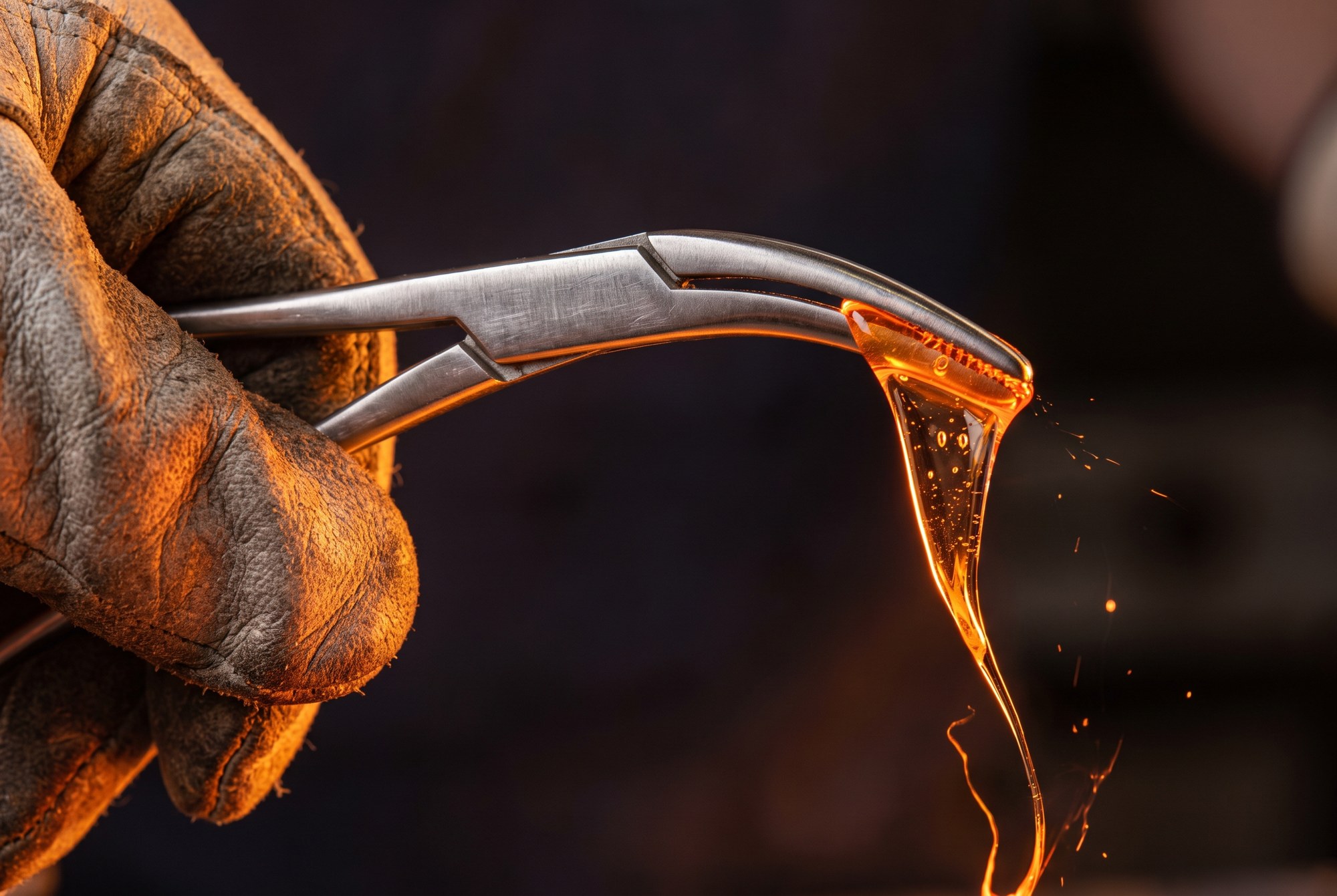
The method as glass artists know it today was formalised in 1993 at Bullseye Glass in Portland, during work by Narcissus Quagliata and Rudi Gritsch. A pot of compatible glass sits over a hole in the kiln floor, the glass softens, and gravity does the rest.
What you are really doing is writing with a molten line. The kiln sets the viscosity. Your hand sets the speed. Everything about the finished component follows from those two things working together.
Pull fast and the line goes thin. Pull slow and it goes thick. That variation is your signature. It cannot be bought and it cannot be copied.
What You Can Make
Fine fluid lines, thick or thin, wavy or straight, with deliberate variation along the length.
Heavier rods, often carrying a pattern through the core.
Wound around a steel pipe as the stream falls.
Thin fast streams left to drop freely and collect into tangles.
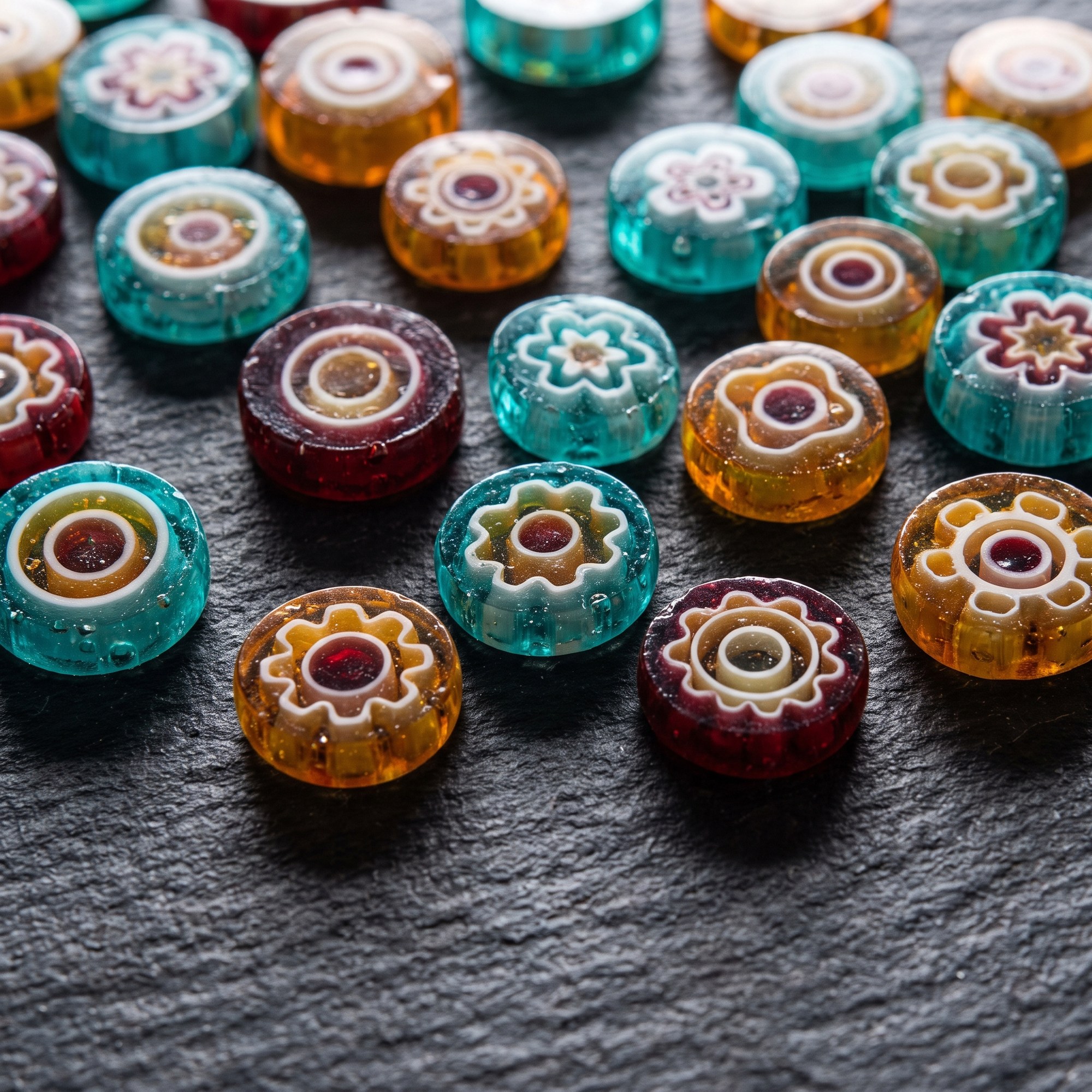
Patterned cross sections, sliced from a rod you built colour by colour.
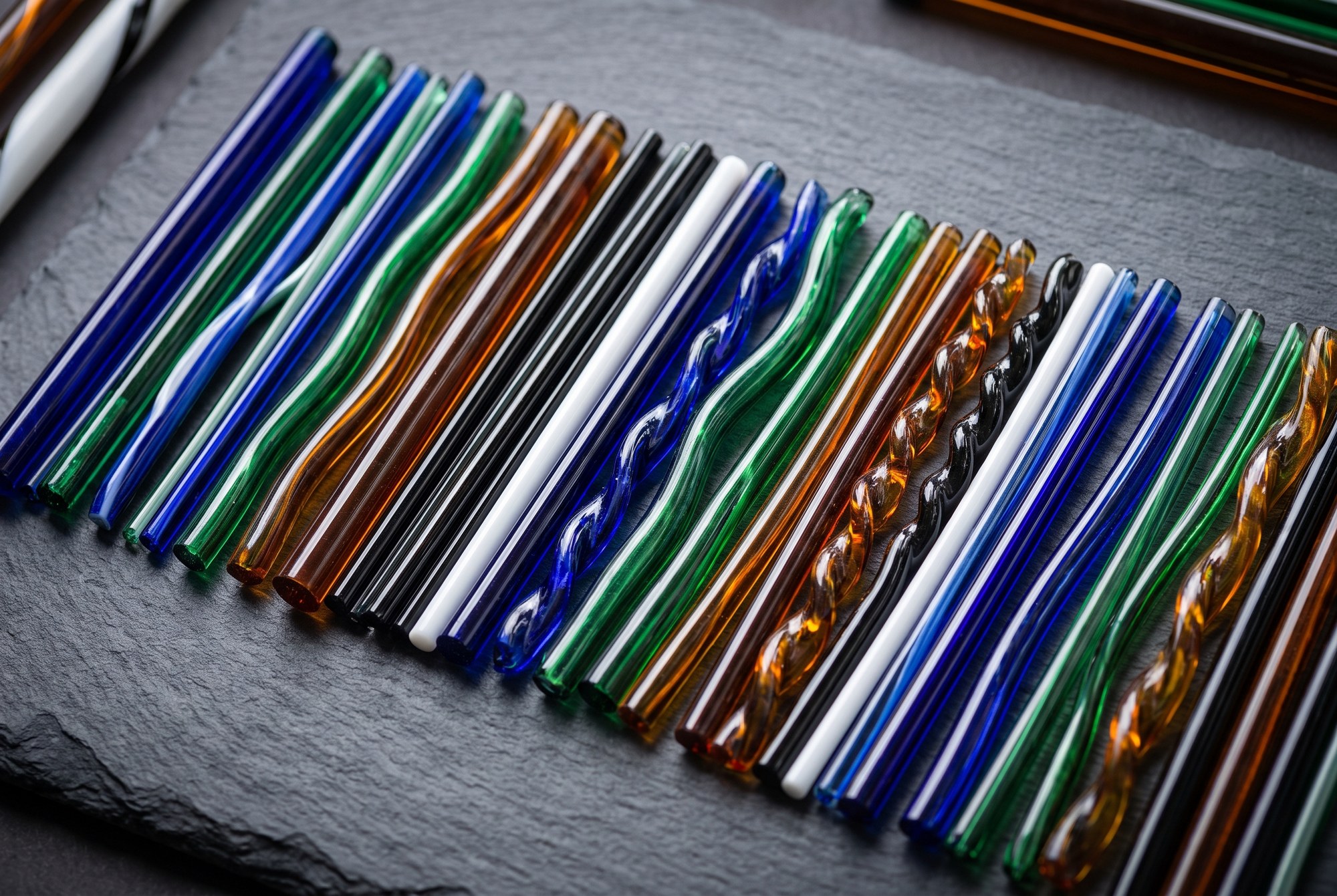
Murrine is a four thousand year old technique, revived on Murano in the sixteenth century, and traditionally it requires a furnace, a glory hole and years of hot shop training. The vitrigraph gets you there from a kiln that plugs into a wall socket.
The Real Objection
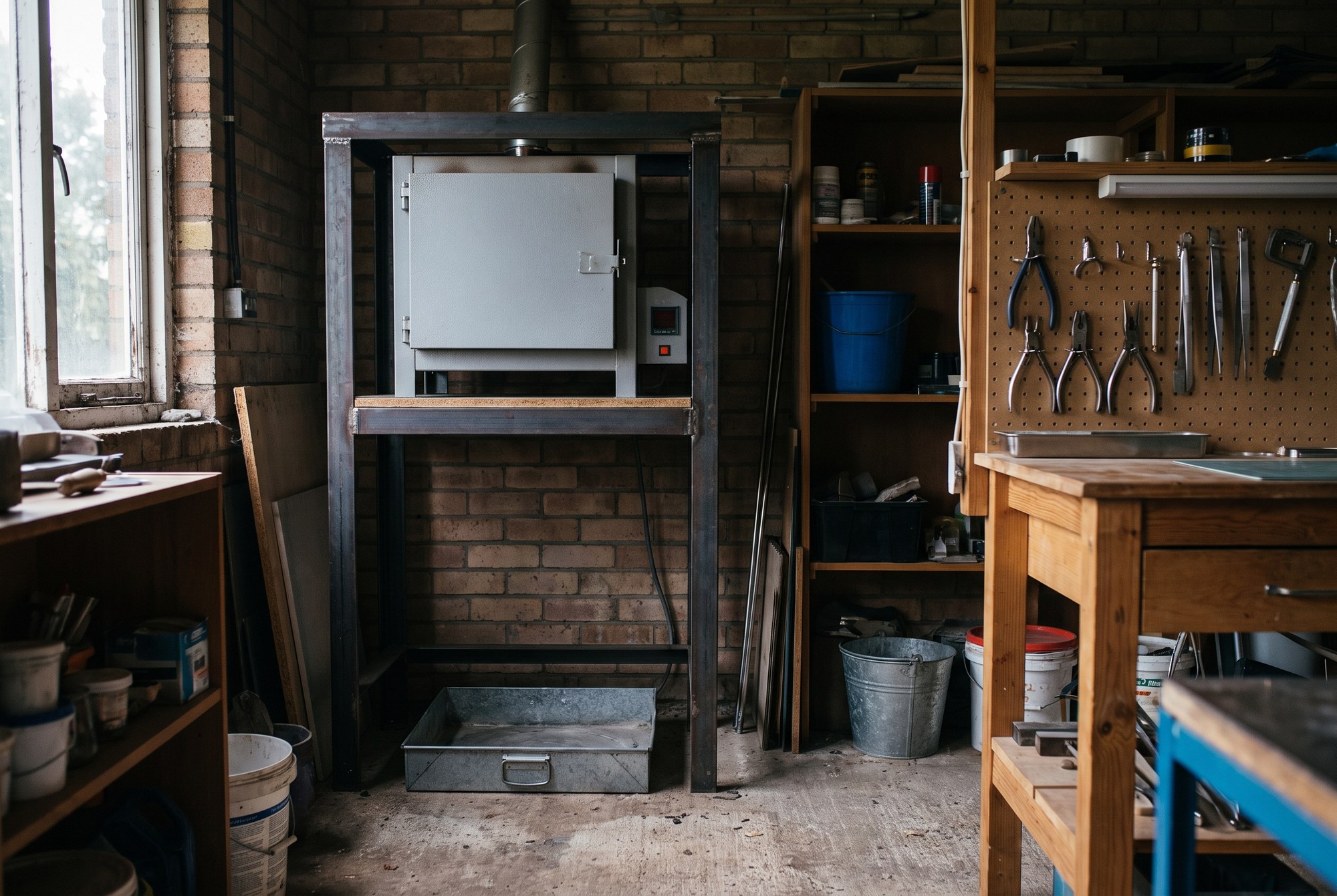
Let us be plain about it. The glass exits the pot at around 1700 degrees Fahrenheit. The hole it comes out of is above your head. Sessions run for hours, not minutes. And you are usually the only person in the building.
Every course, video and forum thread teaches you the pull. Almost none of them teach the person working alone how to set up so that nothing goes wrong in the first place. This one does, and it does it before it teaches you anything else.
Not because the technique is reckless. Because you deserve to start it prepared instead of hopeful.
The Course
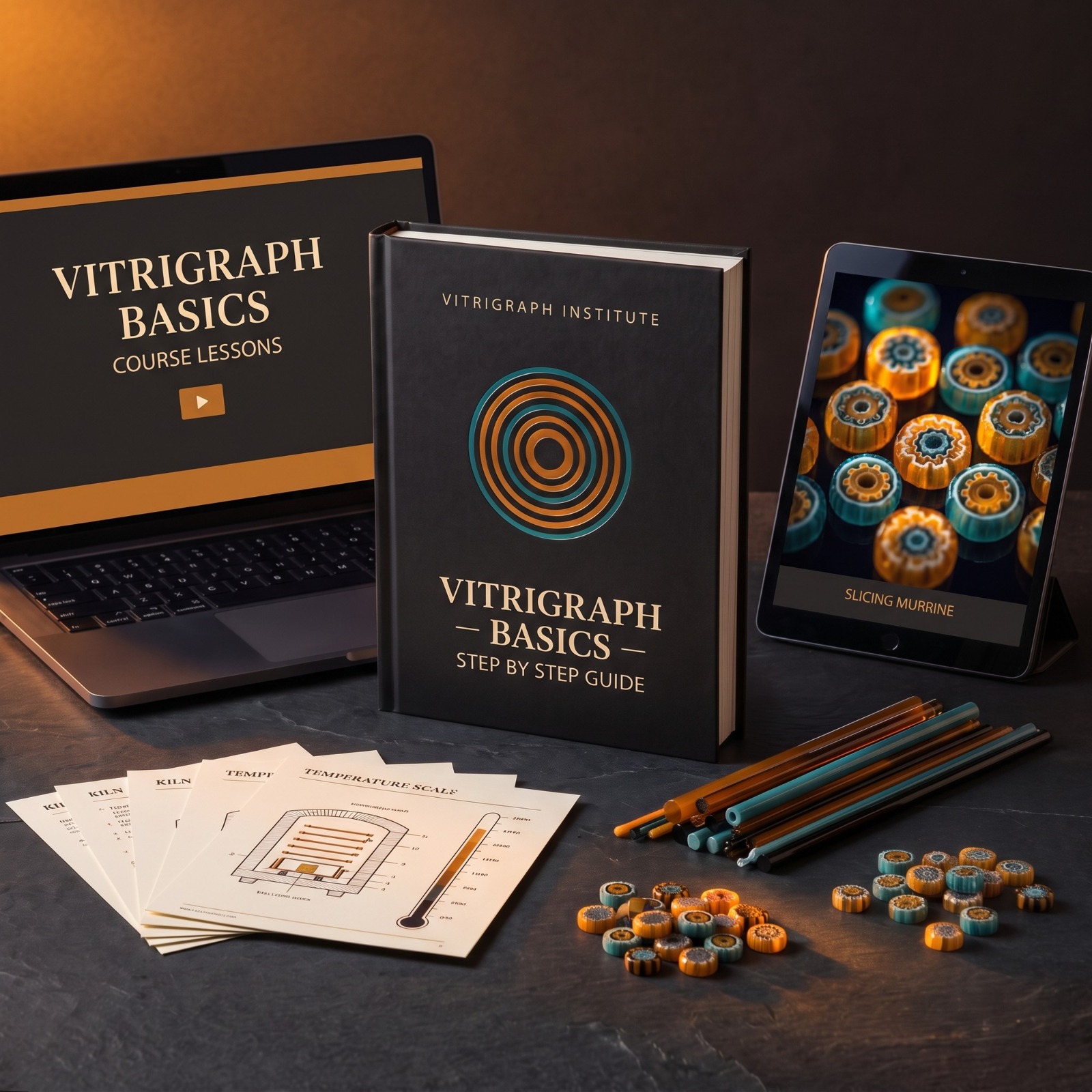
Six modules. Roughly seventy minutes of focused instruction, with no filler.
30-day money-back guarantee · Secure checkout · Instant access
Specifics
Most free content on this technique tells you to experiment. That is fine advice if you have unlimited pots, glass and electricity. Inside, you get the actual numbers.
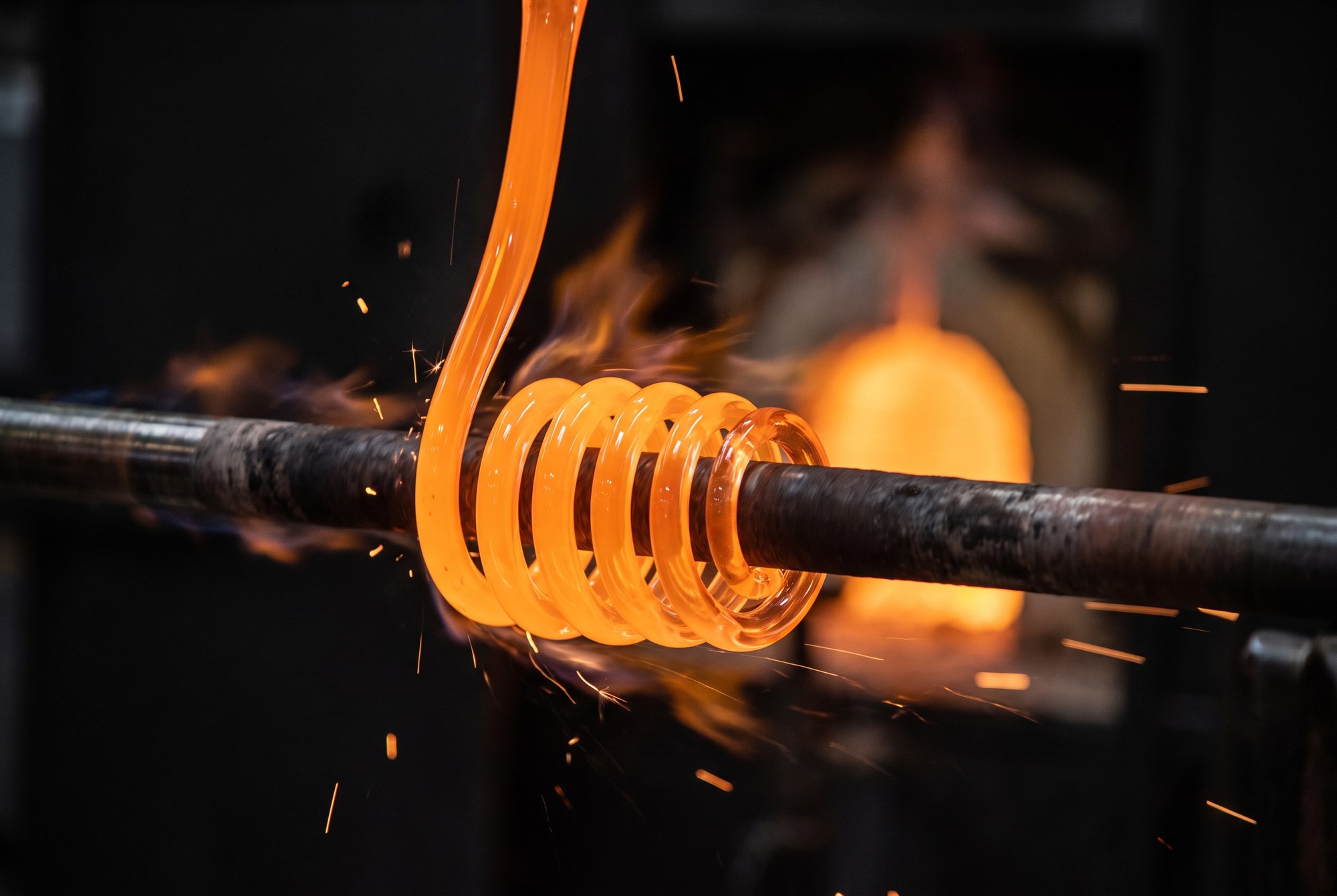
Every number in this course comes from published manufacturer documentation and established studio practice, assembled in one place and in the order you actually need them.

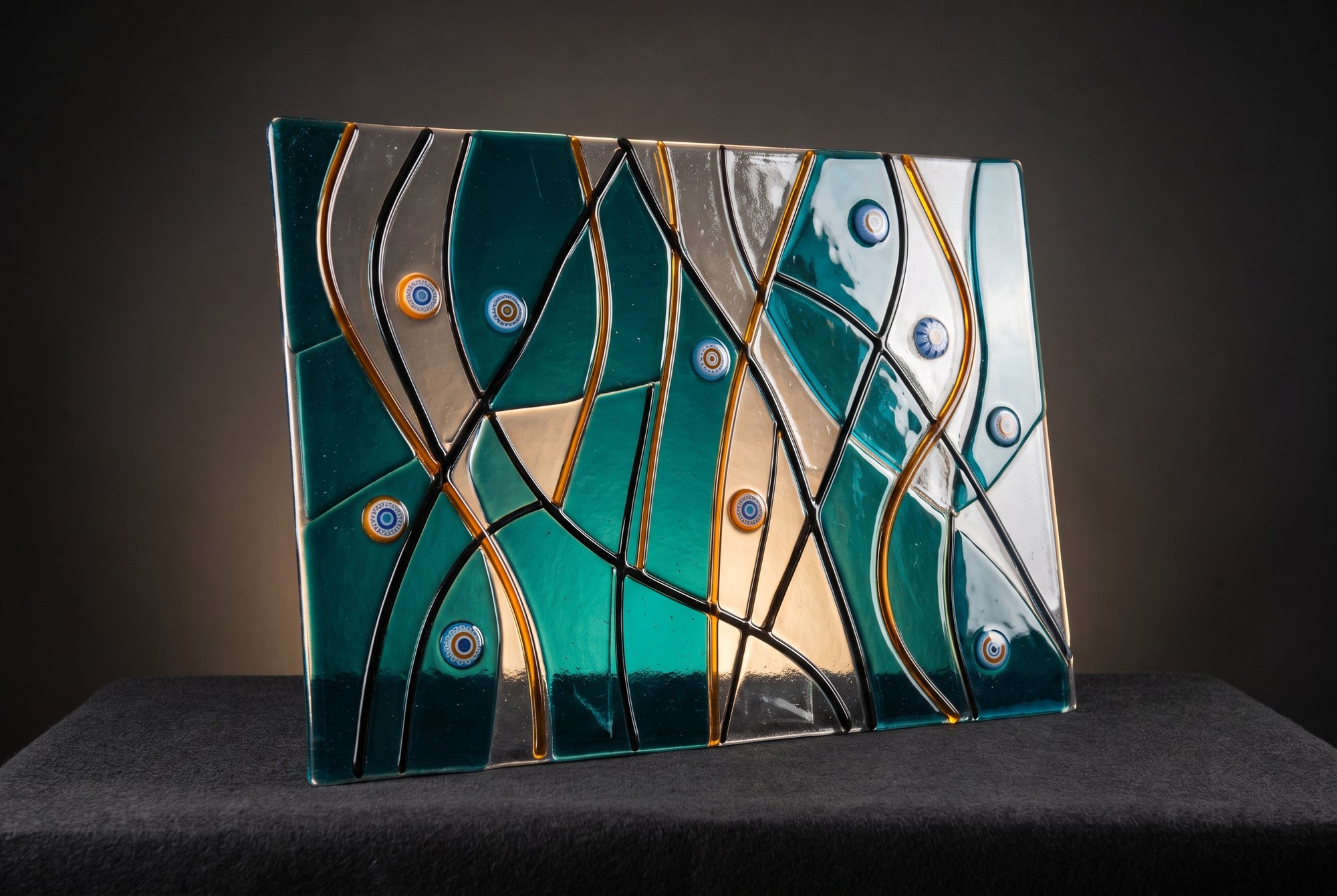
You stop ordering components and start making them.
The box of scrap becomes your palette.
Your work develops a line quality that is recognisably yours, because it came out of your hand at the moment the glass was moving.
And the next time somebody at a fair picks up your piece and asks where you bought that murrine, the answer is that you did not buy it.
Lifetime Access
$37
One-time payment · Lifetime access · Instant access
One-click with Apple Pay or Google Pay. Email only - no account to create.
Watch the whole thing. Build the rig. Run a session. If it has not given you a technique you can repeat, tell us within 30 days and we refund you in full. You keep the notes.
30-day money-back guarantee · Secure checkout · Instant access
Companion Guides
Each deep-dive guide is available on its own. Instant download, one-time payment.
Building, converting and commissioning a vitrigraph kiln.
$17

Designing, loading and slicing patterned cane.
$17

Firing numbers, flow control and defect diagnosis.
$17
Questions
30-day money-back guarantee · Secure checkout · Instant access
Get the free one-page firing-temperature cheat sheet: the process window, ramp rate and equalising hold, in the order you use them.
Email only. No account needed. Unsubscribe in one click.
Instant access · Lifetime updates · 30 day guarantee